Buyer map
A specific buyer with a job, constraint, and reason to care now.
Guide 01 / SP-FND-01
Pick a buyer, find the painful workflow, write the wedge, and validate before you build the stack.
Read the sampleBack to library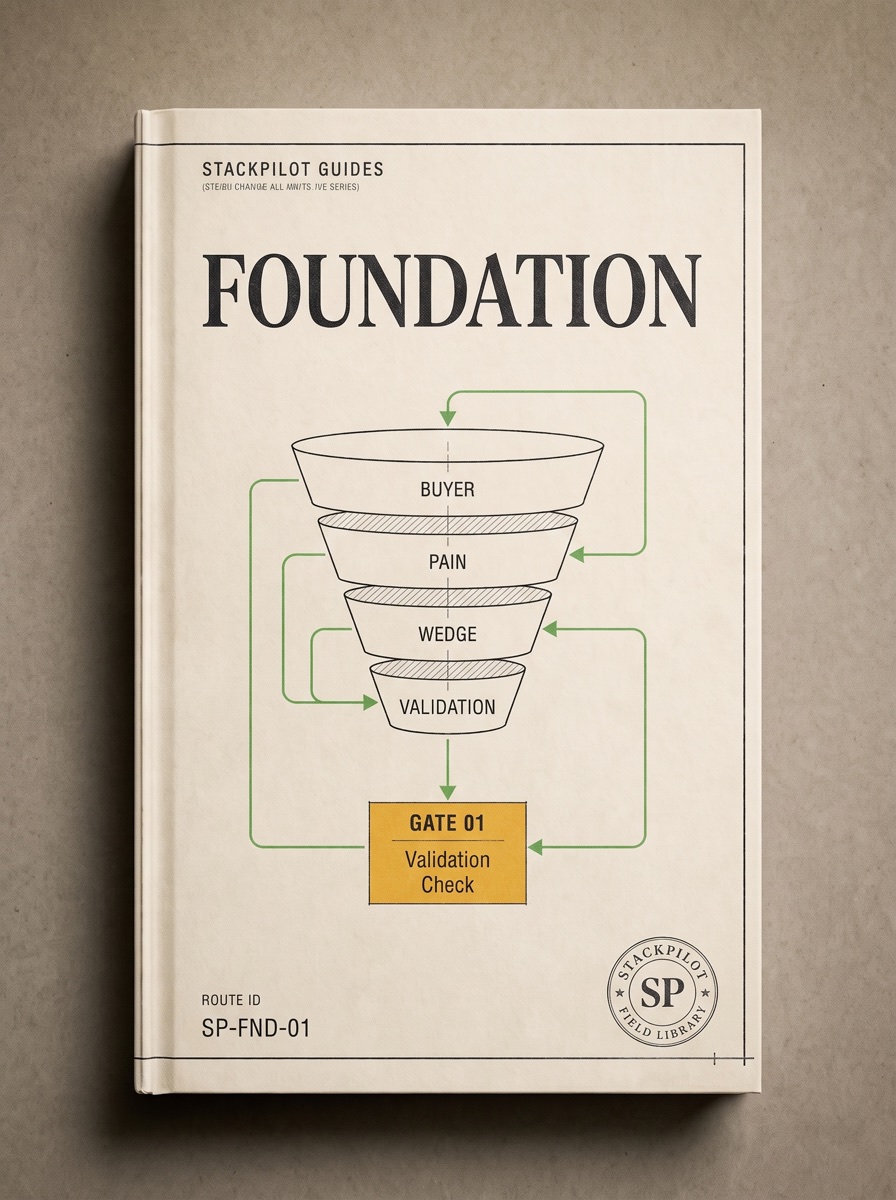
A specific buyer with a job, constraint, and reason to care now.
A ranked list of workflows that cost time, money, or missed revenue.
A small, clear first promise you can test before building a big product.
A ten conversation test that tells you whether the idea is worth building.
Mission outcome
Why this guide exists
Most people start with software because it feels productive. They buy subscriptions, wire automations, and polish pages before they know who cares. This manual forces the order back into place.
You will not leave with a huge plan. You will leave with a sharper starting point.
Inside the manual
Choose one narrow buyer.
Find the expensive workflow.
Study how they handle it now.
Name the outcome they already want.
Package a small first win.
Talk to ten real buyers.
Create the operating folder.
Sample worksheet
A buyer is not a demographic. A buyer is a person with a job, a constraint, and a reason to care now.
Who are you helping?
How do they make money?
What breaks when they get busy?
What spreadsheet, inbox, note, or manual process do they use now?
What does this problem cost?
Why would they fix this soon?
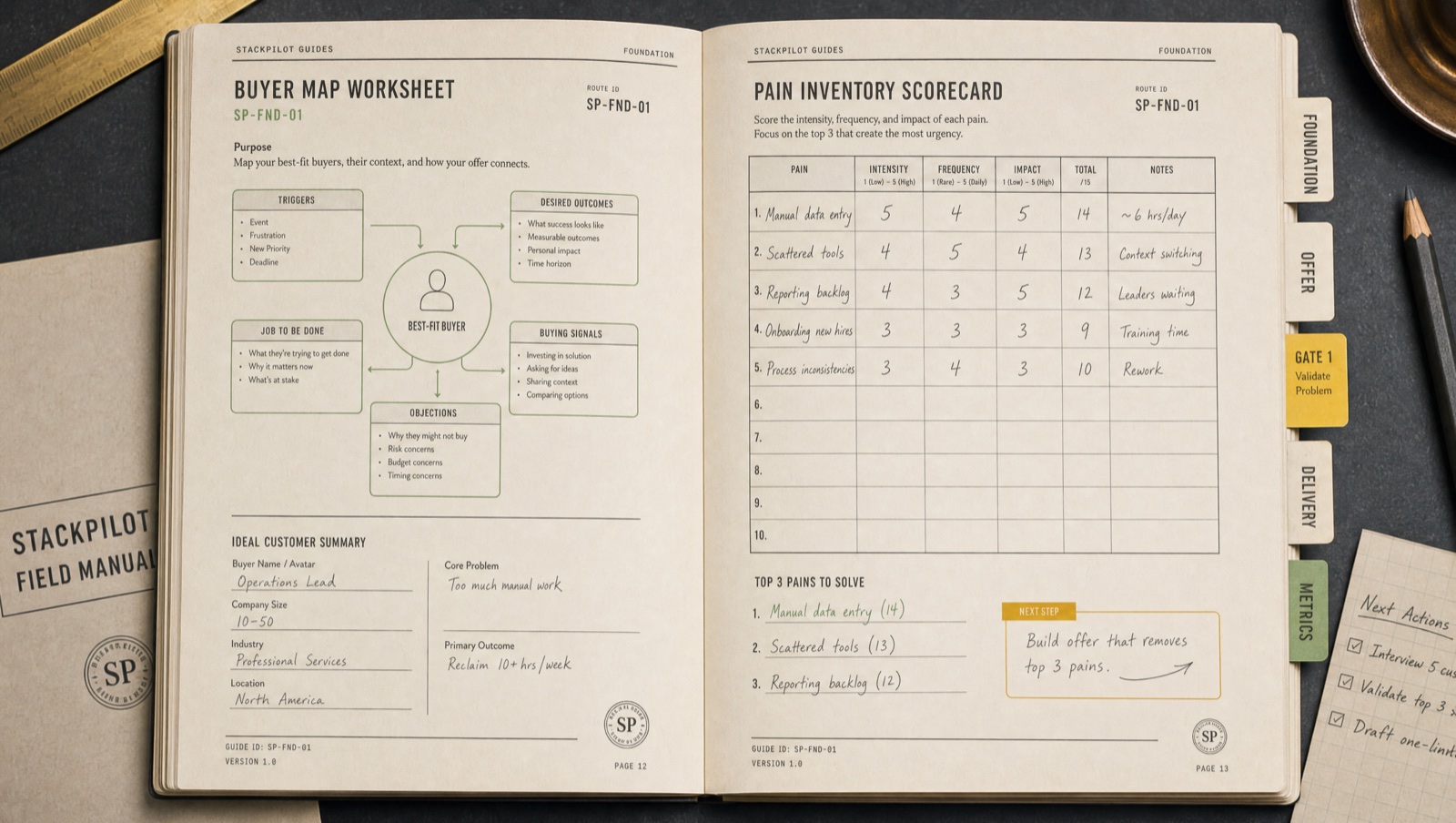
Sample pages
The product should feel like a working operating file, not a PDF blog post. The Foundation guide uses buyer maps, pain inventories, wedge prompts, and validation checklists so the reader leaves with decisions made.
The generated page art creates the shelf appeal. The actual guide text and worksheets stay editable in the product files so the final copy is clean and readable.
A business helps a person solve a problem. Before you use AI, answer five questions:
Do not build an AI agent until you can clearly say:
Foundation Manual PDF/workbook once the product is finalized.
First three guides: Foundation, Offer, Stack.
AI Business Foundation or Pipeline Health audit for people who want help.